email
glass.machines@aliyun.comCALL US
+86-185 3880 9758
CALL US
+86-185 3880 9758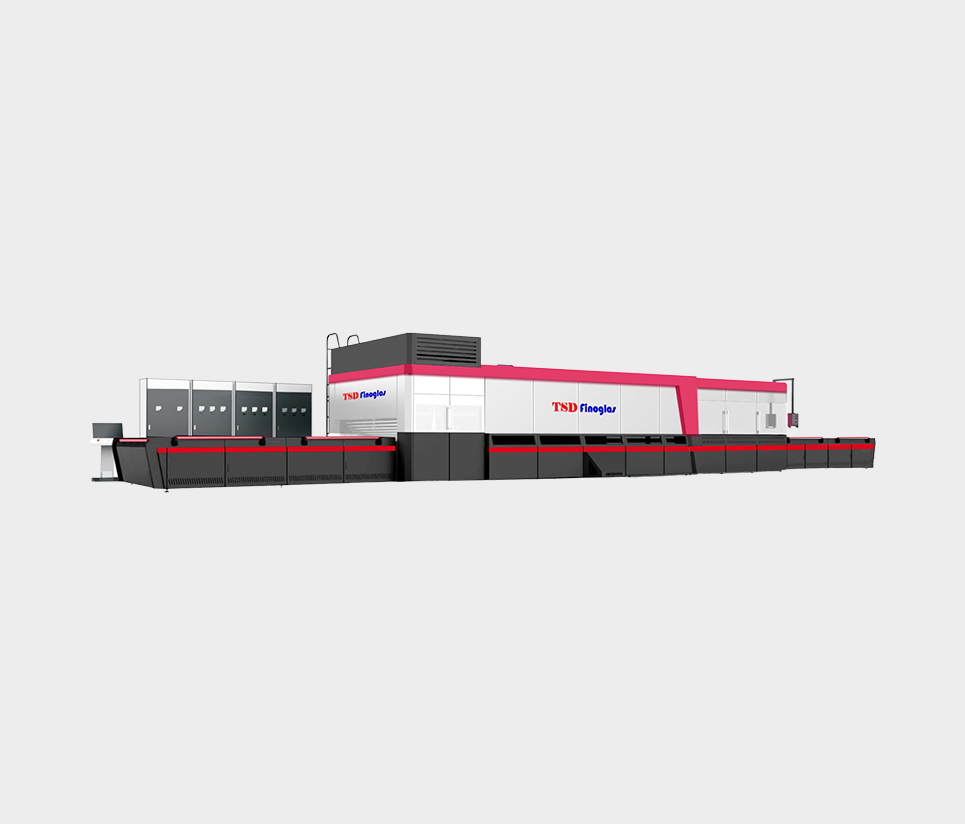
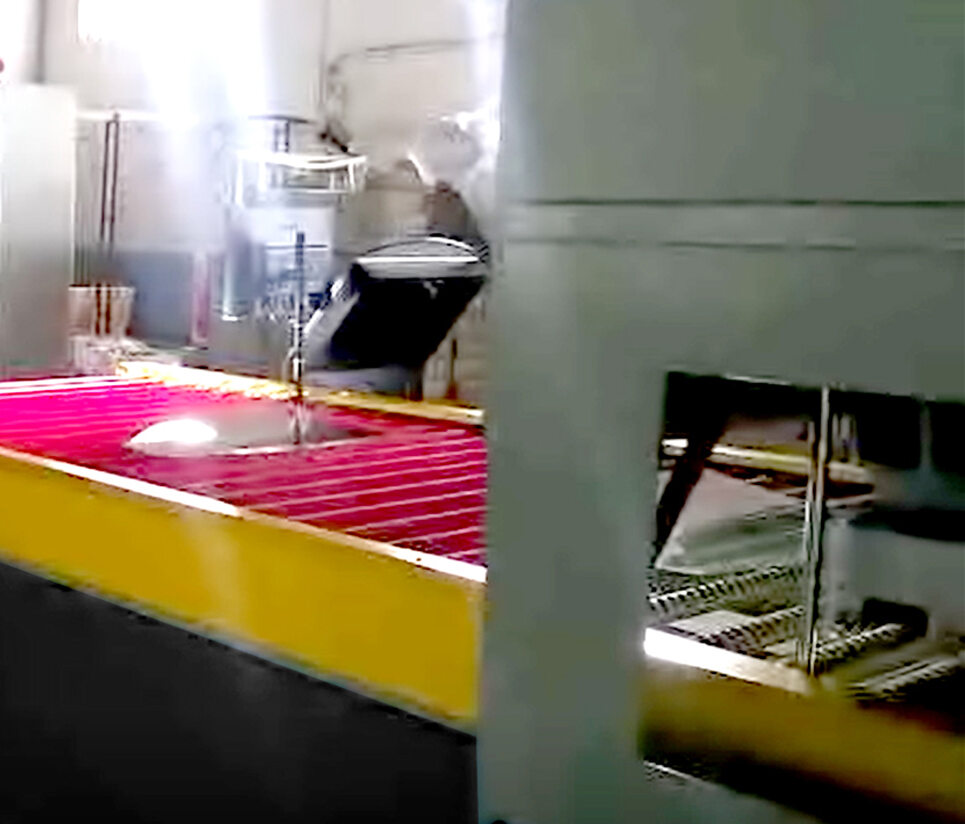
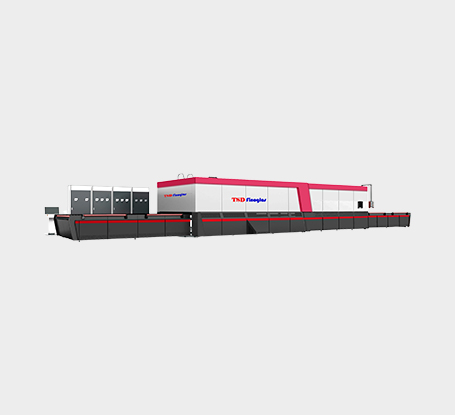
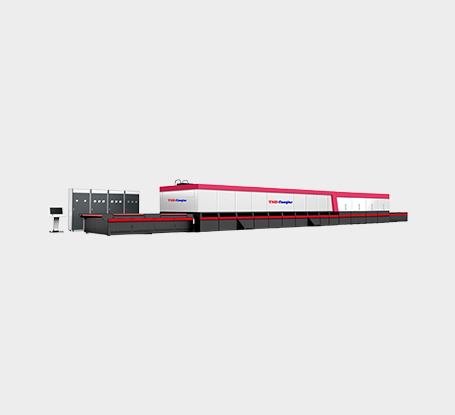
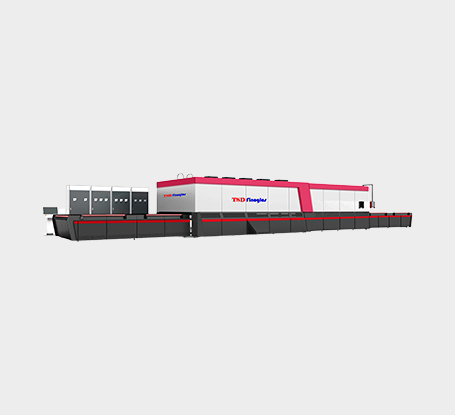
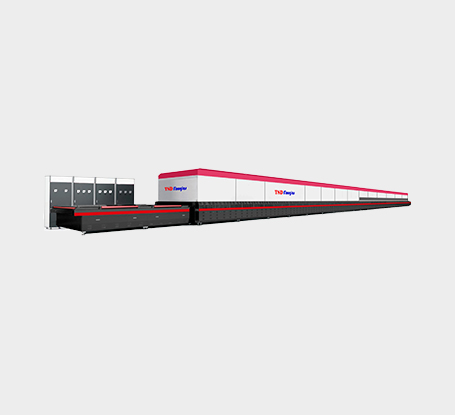
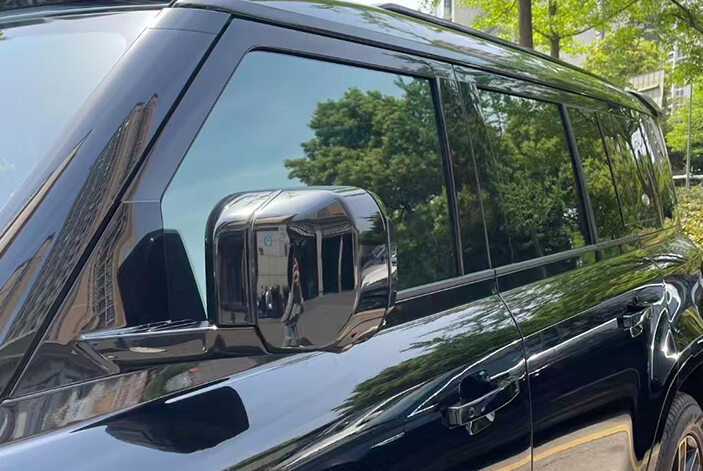
This machine is used to produce the side-lite for automotives bent tempered glass with same arc radius, which are for the single curvature tempered glass.
Glass types can be tempered: clear glass, colored glass, patterned glass, tinted glass, screen printed glass (should be with the ink which can be tempered), hard low-E glass (should be with the film which can be tempered, usually E ≥ 0.1), soft low-E glass (Only by convection type machine ) (should be with the film which can be tempered, usually E≥0.02 ), etc.
★ Radiation heating and forced convection heating system both available for options.
★ this machine can make only bent glass with same arc radius, also can make flat glass if need. For option only.
This machine is used to produce the side-lite for automotives bent tempered glass with same arc radius. Including:
1) Loading section
2) Bent glass section (curved by hard rollers)
3) Heating section
4) Flat section (for option only)
5) Unloading/loading section
6) Blower system
7) Control system
8) UPS system (for option only)
Brief Introduction
1.1 Loading (unloading) section
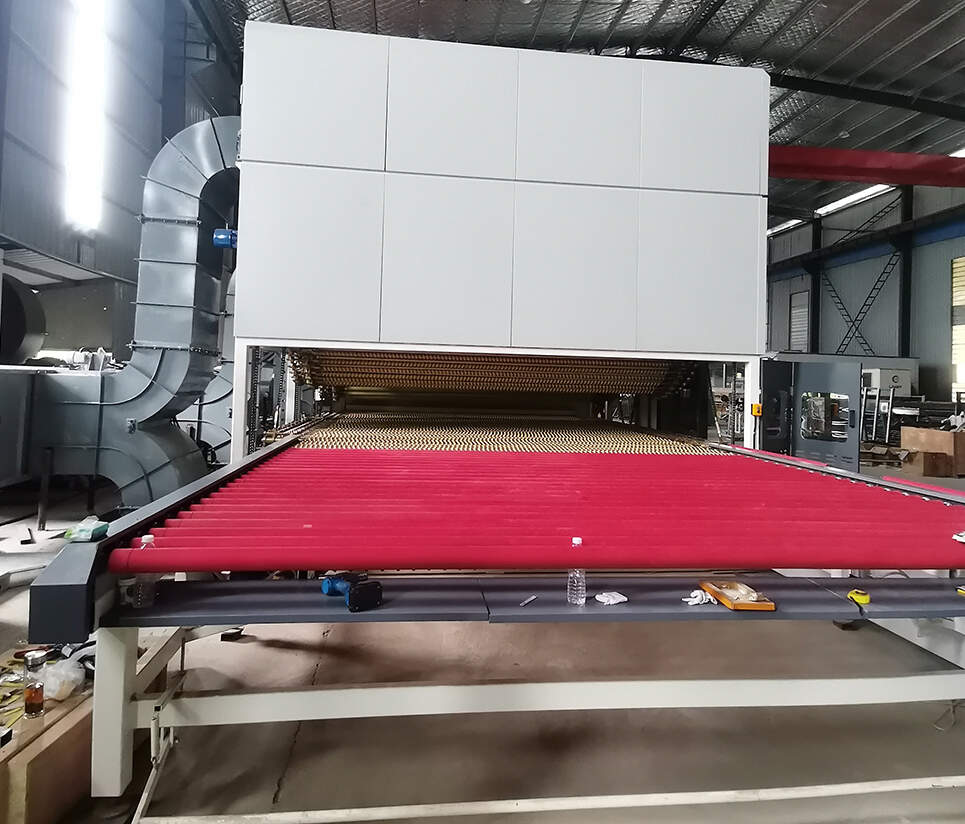
This section includes transmission rubber-coated rollers, loading drive motor, photoelectric sensor, side rubber-coated rollers, elevating table with universal wheels, etc. the drive motor is driven by inverter and the rubber-coated rollers driven by chains, which transports the fixed glass to the photoelectric sensor which at the front door of the heating section, and be ready to enter the heating oven. During loading the glass, rubber-coated rollers are driven by the drive motor and move at a low speed. When glass is entering the heating oven, the drive motor drives the rubber coated rollers to run at a high speed and transport the fixed glass to the heating oven. During loading, the photoelectric sensor will measure and record the length of the glass entering the furnace. Elevating table with universal wheels and side rubber-coated rollers are used for loading the glass of large size.
1.2 Bend tempering & cooling Section
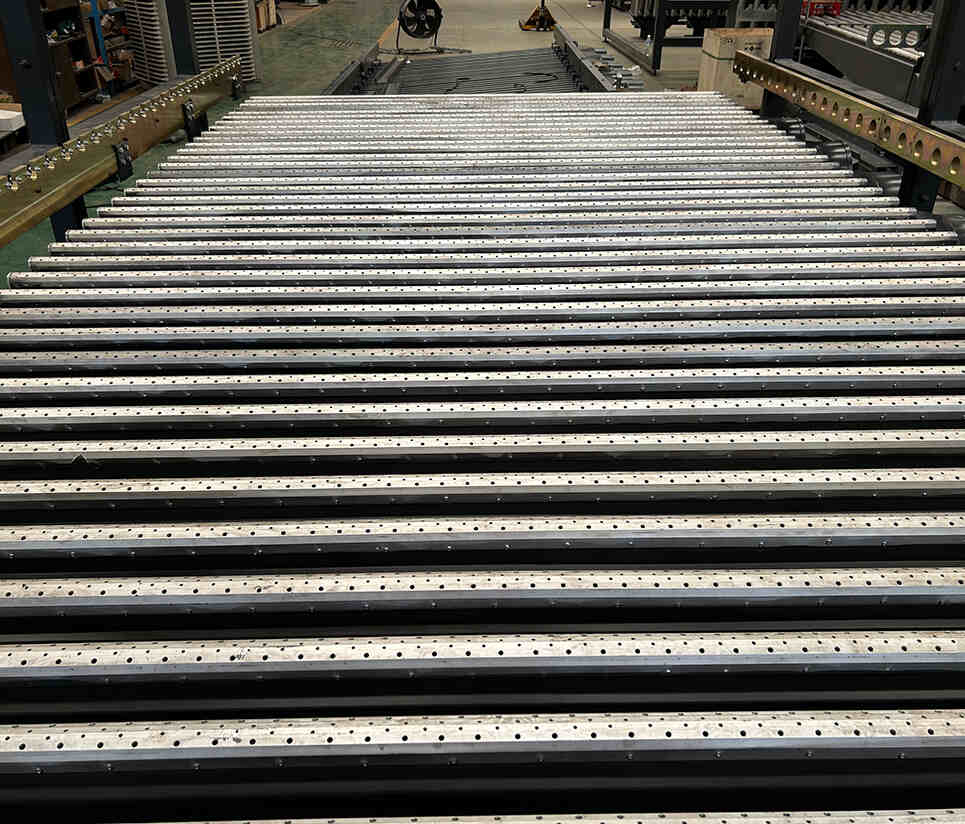
This section includes upper and lower transmutation mechanism, upper and lower quenches, quench lifting mechanism, glass conveying rollers, arc-adjusting system, air box etc.
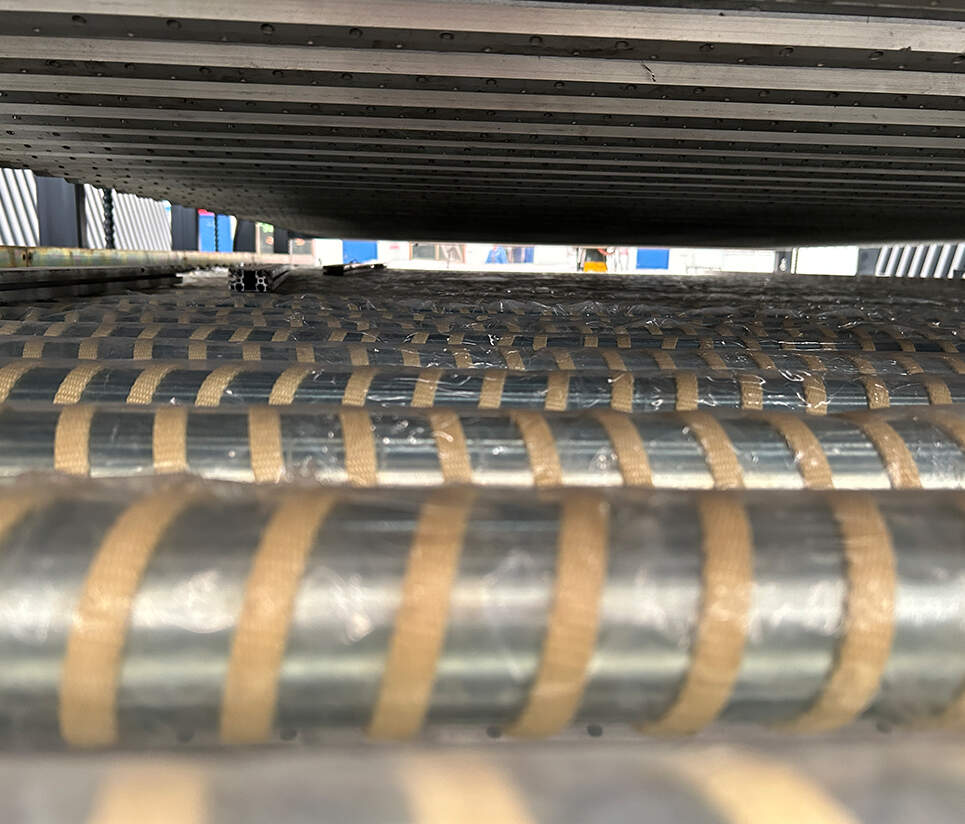
The glass conveying rollers are rigid shaft, aluminium-alloy wheel with fiber rope. The rollers are driven by chain and the frequency conversion driving system, which can insure the same speed of different section.
The forming method is automatic quench transmutation. It needn’t mold. The heated glass is conveyed by conveying shafts to this section, after it has been formed, air begins to blow from quench.
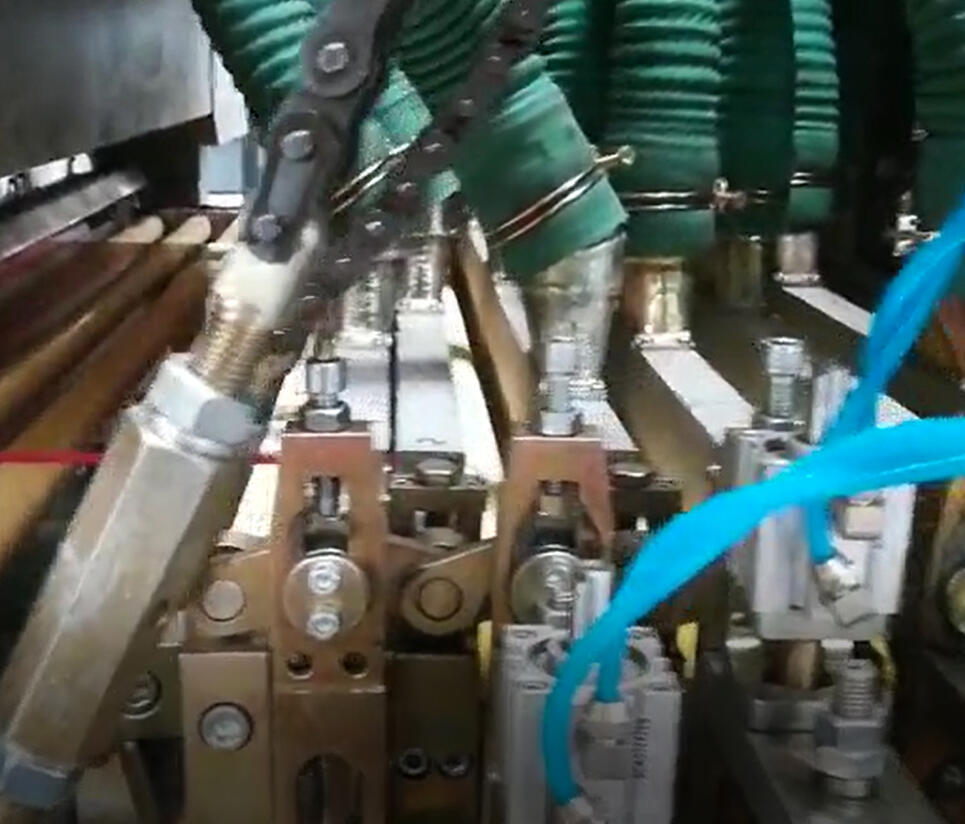
As separated structure, the cooling quench for bent tempering are fixed among the rollers and made actions for deformation accordingly. The cooling air is blown in from the grid back through heat resistant soft hose.
The process for glass curvature forming is controlled by computer. You can input the needed radius data to computer, then required glass will be produced accordingly. But some time, for the new radius, you should make some mini-adjustance manually at the first time.
It only will take about 20minutes time to finish adjusting work when each kind of different glass product is needed to change.
1.3 Heating section
The heating section includes the roof lifting mechanism, heating system, compressed air jet system(air balanced system), ceramic rollers, driving system, emergency cooling system, the glass length and temperature measuring devices.
The heating furnace is divided into upper and lower parts. The upper furnace can freely move up and down by the roof lifting mechanism for easy maintenance. The roof lifting mechanism is composed of set of screws, bevel gear, reduction device, motor, upper and lower limit switches and safety protection devices.
The upper and lower parts of the furnace are heated independently in each heating zone. Each heating zone has its thermocouple forming an independent control loop.
Advanced matrix “talent control” process is unique and special designed for temperature control system, which ensure the precision and even/balance of temperature control to best state and situation.
For the temperature measurement, we adopt the most advanced and latest “modularization” central collection process, which highly improve the precision and good reliability of temperature measurement, as well decrease 80% failure rate if comparing with the normal measurement method.
The ceramic rollers system is driven by round belt. Each ceramic roller is separately moved by individual belt, but all the belts are conveyed by same one set of transmission system, which can ensure simultaneous and stable running, and avoid the scratch and destroy of glass when above the rollers.
When the glass is entering the furnace, drive motors will make the rollers in the loading section and ceramic rollers simultaneously running, conveying the glass into the heating furnace.
When the glass is heated, the main drive motor (namely ceramic roller transmission) will make the ceramic rollers do reciprocating movement, air balanced system starts to work, so that the glass can be heated evenly.
When the glass is exiting the furnace, the rollers in the forming section and the heating section run simultaneously, conveying the glass to flat or bend quenching section.
1.4 Flat Tempering & Cooling Section (for option only if needed)
This section includes transmission rollers, the upper and lower quenches, quench open/close mechanism, air pipes, etc. The quench is of separate ladder-shape combination structure. Air nozzle is of aluminum alloy material. Transmission rollers are steel rollers wheel with kelvar rope. When the glass is about to exit the heating oven, the upper and lower quenches will close automatically and form a gap.
The rollers of flat forming section and these in the heating section run synchronously to convey the heated glass to the flat forming section for tempering. During cooling, glass swings to and fro on the rollers to assure a homogenous urgent cooling.
If producing thin glass of 4-6mm, after urgent cooling for 10-20 seconds, the speed of blower will reduces automatically and the glass is cooled with a lower air volume. It can greatly save energy. If producing thick glass of 8mm and more, first cool it with a lower air volume and then by higher air volume after tempering.
Glass will be cooled when it reaches the unloading section to avoid transmutation and it is convenient to unload the glass by hands.
1.5 Unloading (loading) section
It’s primarily the same as the loading section. After cooling, the glass are conveyed to this section. The glass will stop automatically when reach the end, then the operators unload them by hands.
1.6 Blower system
The blower system includes the blowers, control cabinets, air door control device, air valve, air collector, air volume adjusting mechanism for upper and lower quenches, etc. the starting method of the blower is pressure-reducing type. The use of air collector is to guarantee homogeneous air pressure in every part of the quenches. The air volume in the upper quench and lower quench can be adjusted according to the production need, making the quality of tempered glass optimum. With the inverter, the blower can work in different speed according to the technical requirements.
1.7 Control system
The control system mainly consists of temperature control, transmission control and blower system air pressure control. The control software is strong and reliable. The comfortable man-machine dialogue brings the operator high proficiency. Input test and output adjustment pages make the maintenance and test much easier. Equipment failure detecting and recording function provides sufficient basis to the maintenance personnel.
Most the process parameters can be saved and called freely, such as glass thickness, size, type, color and etc. When produce the required glass the first time the system will automatically save the data that have been set. If you want to make the same glass next time, all the related parameter can be called.

1) The machine adopts industrial control computer and PLC, the speed can be adjusted by the inverter steplessly. High automation made it reliable and precise, easy to operate and efficiency.
2) Conveying speed of the glass entering and exiting the heating oven is controlled by inverter, which can assure high synchronization and avoid scratch on the glass.
3) Heating section has a helix matrix structure, which can control the temperature independently. Reasonable design and unique structure of heating elements make a long serve life.
4) The heating oven body is full closed and the Insulating materials are of high quality material with top performance. It needs 4-8 hours to raise the temperatures from 20℃ to 700℃. Temperature will reduce 10-15℃ per hour (within 24 hours) under natural condition. The installation power is small and production energy consumption is lower.
5) The emergency cooling system is greatly convenient for machine maintenance.
6) The proportion of the air pressure between the upper quench and the lower quench can be adjusted.
7) The software has a powerful function, which is very convenient for operation, maintenance and adjustment.
8) The whole production procedure is controlled and monitored by computer, which is of high automation.
9) Specially for same radius bent glass. Curved by hard rollers construction.
10) Frequency inverter control, more precise, and more heating balance.
11) Curvature system use top quality processing parts.
12) Reasonable design and convenient operation.
13) Each part cooperate well together for curvature system more accurate and high efficiency.
14) Curvature adjustment can be made by hand or by computer to set data.
15) Under this type of machine, flat section and bent section is separate at different side of heating oven, it is double-direction and reversible type. At one set of machine flat glass and bent glass can be processed at different time. (if flat glass needed and optioned)
* Under this type of machine, it can be for bent glass only, also, can be together with additional flat glass (as options only).
|
Type |
Flat glass size (mm) |
Bent glass size (mm) |
|||||
|
Max glass (mm) |
Min glass (mm) |
Thickness (mm) |
Max glass (mm) |
Min glass (mm) |
Thickness (mm) |
Min radius (mm) |
|
|
TSD-TAB 1020-06 |
1000x2000 |
100x250 |
3-12 |
1000͞ x 600◠ |
200͞ x 350◠ |
3-8 |
350 |
|
TSD-TAB 1020-08 |
1000͞ x 800◠ |
450 |
|||||
|
TSD-TAB 1020-15 |
1000͞ x 1500◠ |
4-12 |
750 |
||||
|
TSD-TAB 1225-06 |
1200x2500 |
150x280 |
3-12 |
1200͞ x 600◠ |
200͞ x 350◠ |
3-8 |
350 |
|
TSD-TAB 1225-08 |
1200͞ x 800◠ |
450 |
|||||
|
TSD-TAB 1225-15 |
1200͞ x 1500◠ |
4-12 |
800 |
||||
|
TSD-TAB 1636-08 |
1600x3600 |
150x280 |
3.2-12 |
1600͞ x 800◠ |
200͞ x 350◠ |
4-12 |
450 |
|
TSD-TAB 1636-12 |
1600͞ x 1200◠ |
750 |
|||||
|
TSD-TAB 1636-20 |
1600͞ x 2000◠ |
5-12 |
1000 |
||||
Note:
1.The above data is calculated by 5mm clear glass and 100% loading rate as reference.
2. Above is general size list, others can be customized according to exact need.
3.The company keeps the rights to update data without notice.
Fill the form and send us your message.Get in touch with TSD and find a specialized consultant for you !